
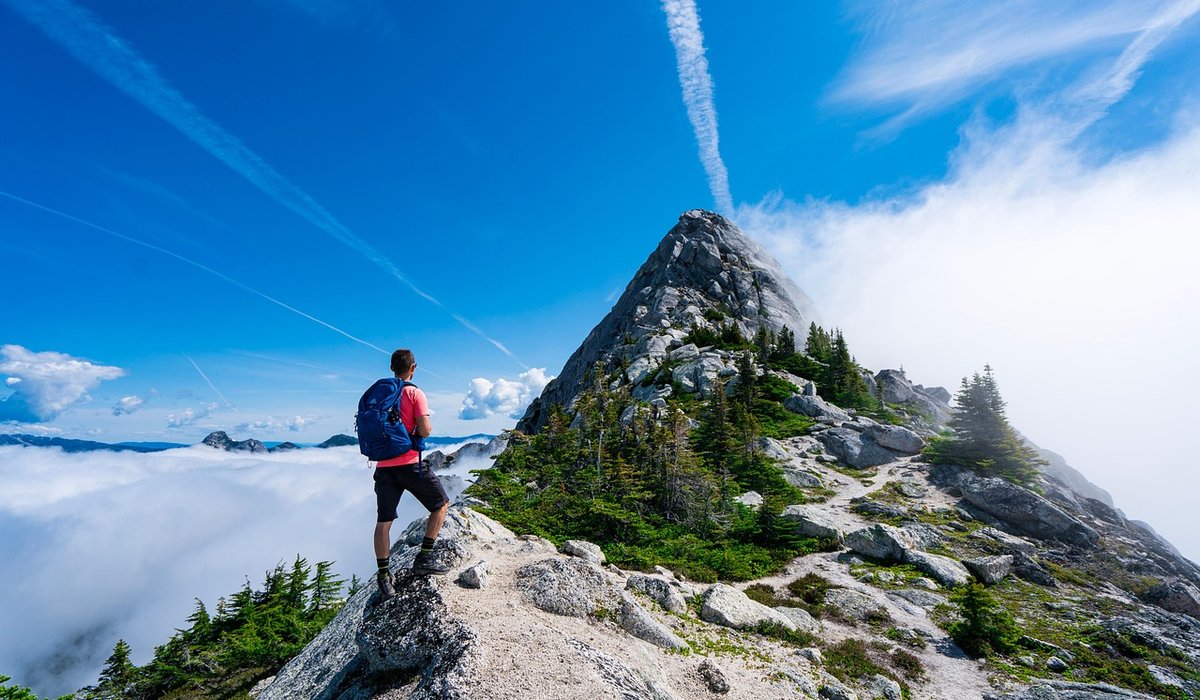
Walking Poles: When They Help And When They Hinder
Why poles divide opinion
Walk into any car park at the foot of a popular fell and you will see the split. One group strides off with poles swinging, another leaves them strapped to the pack, and a third has a pair tucked under an arm, ready but not committed. The argument rarely gets resolved because there is no single answer. Walking poles are a tool, and their value depends entirely on the ground, the load and the person using them. The sensible approach is not to decide once and for all whether you are "a pole person", but to treat them as adjustable kit that you pick up and put away as the terrain changes.
When poles earn their keep
The clearest benefit comes on descents. Walking downhill places several times your body weight through the knee with every step, and a pair of poles lets your arms share that load. Many walkers notice the difference most on long, steep, eroded paths towards the end of a big day, when tired legs start to wobble and the quads are already complaining. Poles also add contact points on wet grass, loose gravel, and slick rock, which improves balance and can save you from a twisted ankle.
- Long descents: particularly on hard-packed or stone-pitched paths where repeated braking loads the knees.
- Boggy moorland: a quick probe before you commit a boot to a bottomless peat hag is worth more than any gaiters.
- River crossings: a pole gives you a third point of contact and helps you test depth and current.
- Heavy packs: the heavier your load, the more your knees and ankles appreciate the support.
- Tired or injured legs: if a knee is grumbling, poles can keep you moving comfortably and safely.
When they get in the way
The moment hands are needed, poles become clutter. On a Grade 1 scramble, a rocky step, or a steep section where you want to use both hands for balance, holding a pole means you cannot grip the rock properly. You either fumble, tuck a pole under an arm, or stab it into a crack and hope. None of these is ideal. Poles can also catch on heather, tussocks, and boulders, tripping you at exactly the wrong moment. On narrow ridges in high wind, they act like sails and make balance worse rather than better.
- Rocky scrambles: stow them. Firm handholds beat a pole every time.
- Narrow ridges and exposed ground: the windage and the need for precise footwork usually outweigh the benefit.
- Dense heather or tussocky ground: poles snag, and you spend more energy untangling than you save.
- Boulder fields: the tips skid on polished rock and the shafts get caught between blocks.
- Technical balance: if you are edging along a ledge or crossing a slippery slab, free hands are safer.
Your experience changes the calculation
Newer hillwalkers often gain most from poles. They provide reassurance on rough ground, reduce the sting of long descents, and help build a steady rhythm on climbs. As experience grows, you learn to read terrain and rely more on foot placement, so poles become optional on easier ground. That said, plenty of very experienced walkers still carry them for big days, especially in winter or on multi-day routes with heavy packs. The key is honesty: if poles make you safer and less sore, use them; if they make you slower and clumsier, leave them behind.
Setup and technique that makes the difference
Poles only help if they are set up properly. On flat ground, the handle should sit at about hip height with your elbow bent to roughly 90 degrees. Lengthen them by five to ten centimetres for descents, and shorten them slightly for steep climbs so you can push down without shrugging. Use the straps, but not as a noose: slide your hand up through the loop from below and grip the handle with the strap across your palm. Plant the tip ahead of you, keep the shaft close to vertical, and let your arms swing naturally.
- Tips: carbide for rock and hardpack, rubber feet for road approaches and polished stone.
- Length: adjust for the terrain, not for fashion. A pole that is too long forces you to lean back.
- Technique: shorter, quicker plants on steep ground; longer, relaxed swings on gentle trails.
A terrain-by-terrain rule of thumb
- Grassy descents and eroded paths: use them, and lengthen slightly.
- Boggy moorland: use one or both for probing and balance.
- Gentle valley tracks: carry them or leave them; they add little.
- Rocky scrambles and ridges: stow them and free your hands.
- Winter conditions: use them, but pair with an ice axe where needed, and know which hand holds what.
- Multi-day with a heavy pack: use them, especially on the descents.
tag: Kit Reviews

Priya Nair Author
Arrive late, leave early, use existing pitches and keep noise low so local communities and wildlife remain undisturbed.
YOU MAY ALSO LIKE
Wild Camping Etiquette In Popular Mountain Areas
Jun 18
10Increase distance gradually, include steep gradients and train with your loaded rucksack to make full days feel comfortable.
read more
Building Fitness For Longer Hillwalking Routes
Jun 16
10A practical guide to fit, sole grip and breathability so your feet stay dry on muddy paths and wet moorland.
read moreHillwalking
-

ERRIC CATONA
Learn to set the map, take bearings and follow contours without relying on phone signal in remote hill country.
May 19, 2016 at 5.12 pm
Reply
ERRIC CATONA
Check weather, route timings, kit and emergency contacts before leaving the car park for a day on the hills.
May 19, 2016 at 5.12 pm
Reply -
ERRIC CATONA
Choose a legal pitch, carry enough water and leave the landscape unchanged when you wake beneath the stars.
May 19, 2016 at 5.12 pm
Reply
Peak Bagging
Your email address will not be published.